
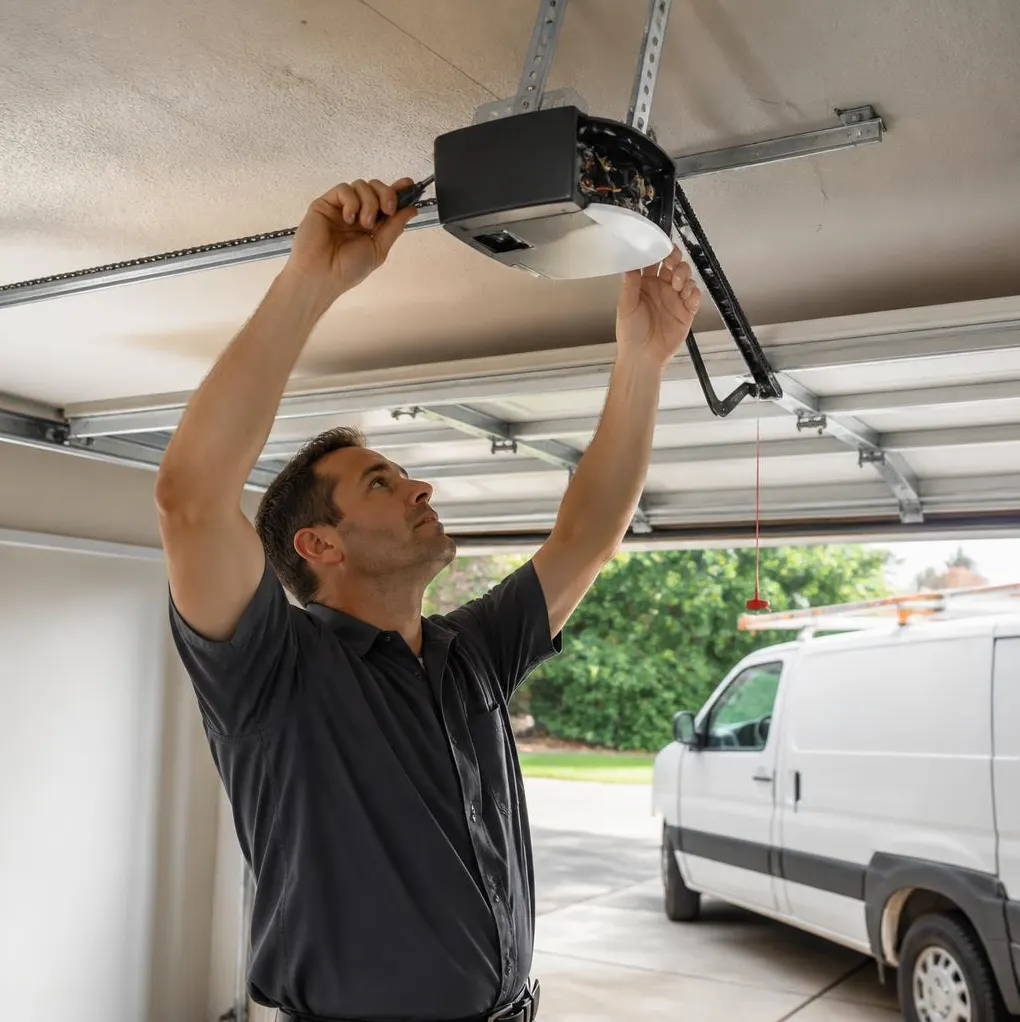
The Morning It Won't Move
You hit the opener button on your way out and nothing happens, or the door creeps up an inch, groans, and stalls. Maybe it lifts on the second try but drags along the bottom seal, leaving a thin crust of ice on the concrete where the weatherstrip used to sit flush. This is a familiar scene in Kershaw County during the occasional ice storms that roll through between December and February. The ground near a garage slab stays wet longer than the rest of the driveway thanks to runoff and shade, and that moisture is exactly what freezes the rubber seal to the concrete overnight.
What You're Actually Seeing
- The door won't lift at all and the opener strains, clicks, or reverses itself.
- The door lifts partway then stutters, like it's fighting something at the bottom.
- The door opens but moves slower than normal, or the opener light blinks an error code.
- A visible line of ice or frost sits along the bottom seal where it meets the slab.
Each of these points to a different stage of the problem, and a technician checks them in a specific order because the simplest, cheapest cause is almost always the first one to rule out.
Cause 1: The Weatherstrip Is Frozen to the Slab
This is the most common issue after a cold snap with rain or sleet beforehand. Vinyl weatherstripping along the bottom of the door holds a small amount of water against the concrete, and when temperatures drop below freezing, that thin film turns to ice and glues the door shut. The fix is simple and shouldn't involve force: never try to power through it with the opener, which can strip the gears or bend the bottom panel. Instead, use a hair dryer, warm water, or an ice scraper along the seal to break the bond gently, then dry the area so it doesn't refreeze. If this keeps happening every time it frosts, the weatherstrip itself may be worn thin or installed with a gap that traps water, and replacing it is a quick fix that prevents the whole problem going forward.
Cause 2: Stiff or Contracted Springs
If the seal breaks free but the door still feels heavy or the opener strains, the next thing a technician checks is the torsion spring. Metal contracts in cold weather, and a spring that's already near the end of its lifespan can lose just enough tension to make lifting the door noticeably harder. This usually shows up as a door that's sluggish for the first cycle of the morning and loosens up once temperatures climb. It's also one of the more dangerous DIY fixes to attempt, since torsion springs are under heavy tension and adjusting them requires the right tools and training. A technician will check the spring's wind and wear, and if it's near failure, replacement is the right call before it snaps and takes the cables or a panel with it.
Cause 3: Thickened Lubricant on Rollers and Hinges
Garage door lubricant isn't all rated the same way, and some all-purpose oils thicken in cold weather, slowing down the rollers and hinges just enough to make the door feel like it's dragging. This is checked after springs because it's a less dramatic cause but still common, especially on doors that haven't been serviced in a year or more. The fix is straightforward: clean off the old, gummed-up lubricant and apply a silicone-based spray made for garage doors, which stays fluid across a wider temperature range than household oils. This is also a good moment to check rollers for flat spots or cracking, since humid Lugoff summers followed by a hard freeze put extra stress on nylon and steel rollers alike.
Cause 4: Opener Sensor or Motor Issues in the Cold
If the door moves freely by hand but the opener won't cooperate, the last thing checked is the opener itself. Photo-eye sensors near the floor can mist over or get knocked out of alignment, especially in garages where humidity lingers after rain. Older opener motors can also run sluggish in a cold garage, particularly if the unit sits in an unheated, uninsulated space, which is common in older Lugoff and Camden-area homes built before attached garages were insulated as living space. Realigning sensors is a five-minute fix; a tired motor may need a capacitor replacement or, if it's old enough, a full opener upgrade.
When to Call Lugoff Garage Door
If your door is frozen shut more than once or twice a season, moves noticeably slower in cold weather, or you hear new grinding or popping sounds when it operates, it's worth having it looked at before a spring fails outright or the opener burns out. Lugoff Garage Door handles both spring replacement and garage door maintenance visits that check weatherstripping, lubrication, and opener sensors in one trip, so you're not guessing which of these four causes is yours.
If your garage door is sticking, groaning, or flat-out refusing to open this winter, call Lugoff Garage Door for fast, honest service anywhere in Lugoff, SC.