
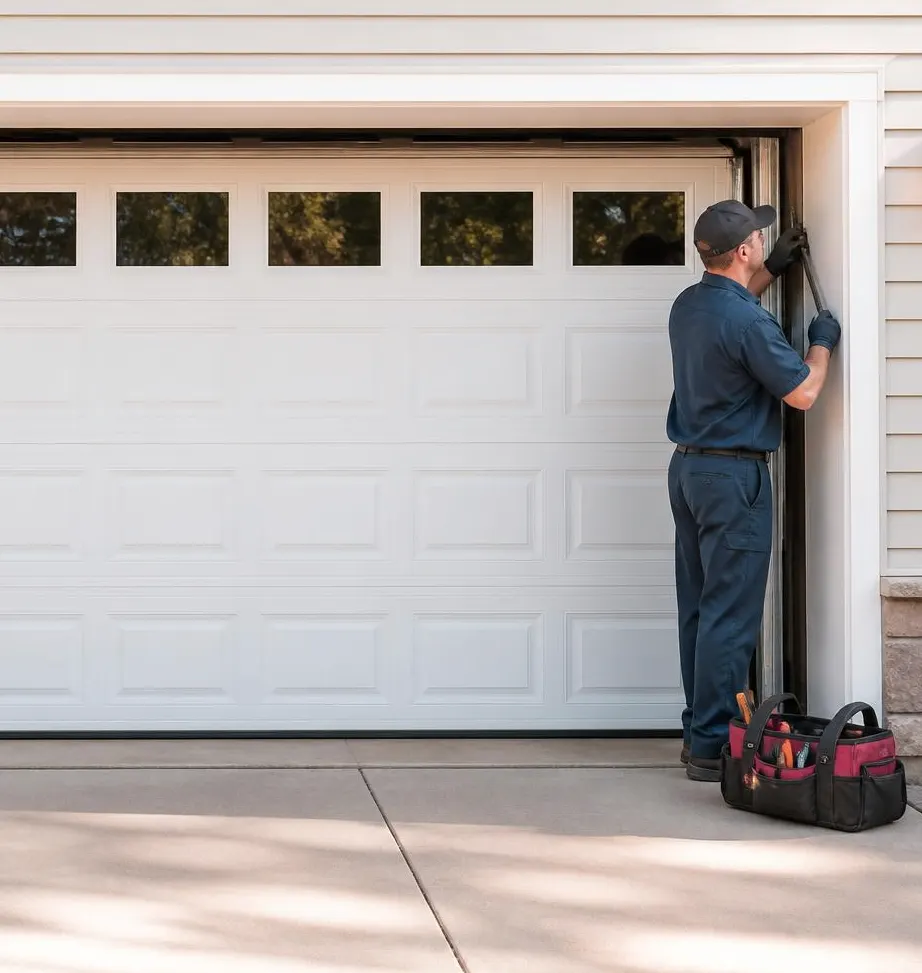
What Waiting Another Season Actually Costs
If the argument is "let's just deal with it in spring," here's the honest math: a garage door that's already struggling in October rarely improves over a Carolina winter. Humidity swells wood panels, ice storms can snap a weakened spring on the one morning you need to leave for work, and pine debris sitting in the track all fall works its way into rollers and openers. Waiting doesn't pause the problem, it usually finishes the job the weather started. A door that needed a tune-up in October can need a full spring replacement or a new opener by February, and that's a bigger bill than the one you're avoiding now.
Does a Garage Door Really Affect Resale Value?
Yes, but not in the dramatic way online articles sometimes suggest. The garage door is often the single largest visual element on the front of a house, especially on homes where it faces the street more directly than the front door does. Real estate agents and appraisers consistently point to it as one of the first things buyers notice, simply because of how much square footage it takes up on the facade. National renovation-value reports have repeatedly ranked garage door replacement among the higher-return exterior projects, often recovering a large share of its cost at resale, sometimes more. These are general ranges you'll see cited industry-wide, not a guarantee for any specific house, but the pattern is consistent: it's one of the better curb-appeal dollars you can spend.
What it won't do is single-handedly sell a house or add a specific dollar amount to an appraisal. Resale value is about perception and first impressions, not a line-item the appraiser adds in. A damaged, dented, or mismatched door makes a buyer wonder what else was neglected. A clean, properly working one just looks normal, which is exactly the effect you want.
The Real Argument: Looks vs. Function
This is usually where the spouse disagreement actually lives. One person wants it to look better, the other wants it to work better. The good news is those two goals overlap more than people think.
- Cosmetic issues — fading, chalky paint, dents, mismatched trim colors — hurt curb appeal but don't affect safety. These can often wait, or be solved with simple cleaning, repainting, or hardware updates rather than a full replacement.
- Functional issues — a door that's slow to respond, reverses unexpectedly, sags on one side, or makes a grinding or popping noise when moving — are safety and cost problems. These get worse with moisture and temperature swings and should not wait for a budget conversation.
If you're arguing about whether to spend money now, separate the two. A fresh coat of paint or new handles is a weekend project. A spring that's visibly stretched, rusted, or uneven is not something to schedule around.
What Actually Moves the Needle on Curb Appeal
You don't need a brand-new door to change how a house looks from the street. In order of cost and impact:
- Clean and lubricate. Years of pollen, pine sap, and humidity buildup on the track and panels make even a decent door look tired. A real cleaning plus lubricating the rollers and hinges often resets the appearance for the cost of an afternoon.
- Repaint or refinish. Steel and wood-composite doors can usually be repainted. This is the highest curb-appeal return for the lowest cost, especially if the door color no longer matches the trim or siding after a few years of fading.
- Replace hardware. Decorative handles, hinges, and windows are inexpensive upgrades that make an older door look intentional rather than outdated.
- Replace the door. This is the biggest investment and the biggest visual change. It makes sense when the door is damaged, inefficient, or genuinely at the end of its life, not just a little faded.
How to Tell If Repair Is Enough
Before anyone commits to a full replacement, check for these signs that a repair will solve the real problem:
- The door is structurally sound — no major rust-through, warping, or panel damage, which is more common here given humidity and summer storms.
- Springs and cables are the main issue, not the door itself. Spring replacement is routine and far cheaper than a new door.
- The opener is struggling but the door moves fine by hand. That's usually an opener repair, not a door problem.
- Noise or slow response started recently rather than being a years-long issue, which often points to lubrication, track alignment, or a worn roller rather than age.
If instead the door has been patched more than once, doesn't insulate well against summer heat, or shows wood rot or rust from years of moisture around the garage, replacement starts making more financial sense than continuing to repair it.
When to Call Lugoff Garage Door
If the disagreement is really about whether something is safe to leave alone, that's worth settling with an actual inspection rather than guessing. Lugoff Garage Door can assess whether you're looking at a simple fix or a real replacement situation. Common calls heading into winter include spring replacement, where a stretched or rusted spring needs swapping before it fails on a cold morning, and garage door opener repair, when humidity or age has caused the motor or sensors to act up. We'll give you a straight answer on repair versus replace, with no pressure toward the bigger job if it isn't needed.
If your garage door has been part of a household debate for more than one season, let us settle it. Call Lugoff Garage Door today for an inspection or free estimate, serving Lugoff, Camden, Elgin, Pontiac, Blaney, Boykin, Cassatt, and Westville, SC.